Running a company in today’s economy comes with risk — whether you’re a sole trader, limited company, freelancer, or retail shop owner. That’s why Business insurance for small business UK is not just optional protection; it’s a critical safety net for survival and long-term growth.
From public liability claims to cyber attacks and employee injuries, small businesses face real financial exposure. In this complete guide, we break down coverage types, legal requirements, costs, and how to choose the right policy for your business.

What Is Business Insurance for Small Business UK?
Business insurance for small business UK refers to a package of insurance policies designed to protect small companies from financial loss due to accidents, claims, property damage, legal disputes, and operational disruptions.
Depending on your business type, you may need one policy or a tailored bundle.
Typical businesses that need cover include:
-
Sole traders
-
Limited companies
-
Contractors
-
Freelancers
-
Online sellers
-
Retail shops
-
Cafés and restaurants
-
IT consultants
-
Tradespeople
In the UK, some insurance types are legally required, while others are strongly recommended.
Is Business Insurance Legally Required in the UK?
Employers’ Liability Insurance (Mandatory)
If you employ staff — even part-time — you are legally required to have:
-
Minimum £5 million coverage
-
From an FCA-authorised insurer
-
Certificate displayed in your workplace
Failure to comply can result in fines of £2,500 per day.
You can verify authorised providers through the Financial Conduct Authority.
Public Liability Insurance (Not Mandatory but Essential)
While not legally required, many clients, landlords, and councils demand it before signing contracts.
For example:
-
Market traders
-
Event organisers
-
Construction contractors
-
Retail stores
Without it, a single accident claim could bankrupt a small company.
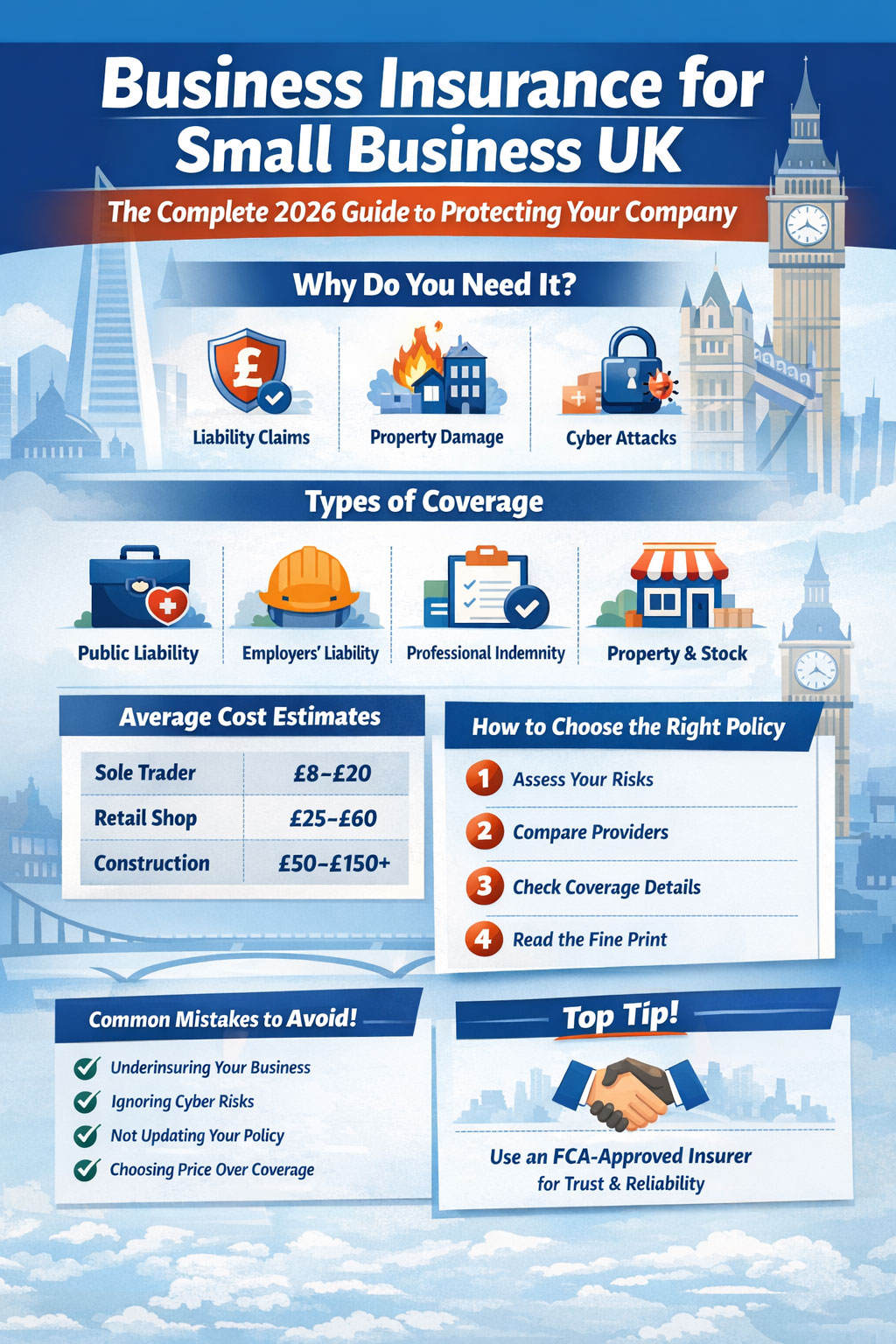
Types of Business Insurance for Small Business UK
Understanding coverage types helps you avoid overpaying or underinsuring.
1. Public Liability Insurance
Protects against claims from third parties for:
-
Injury
-
Property damage
-
Accidents on your premises
Common coverage levels:
-
£1 million
-
£2 million
-
£5 million
-
£10 million
2. Employers’ Liability Insurance
Covers:
-
Workplace injuries
-
Illness caused by work
-
Legal costs
-
Compensation claims
Required by law if you hire employees.
3. Professional Indemnity Insurance
Essential for:
-
Consultants
-
Designers
-
IT professionals
-
Financial advisers
Protects against:
-
Negligence claims
-
Poor advice
-
Professional mistakes
4. Business Property Insurance
Covers:
-
Equipment
-
Office contents
-
Tools
-
Stock
-
Buildings
Important for retail shops, warehouses, and tradespeople.
5. Cyber Insurance
With rising cybercrime in the UK, this protects against:
-
Data breaches
-
Ransomware attacks
-
GDPR fines
-
Business interruption
For online businesses and IT companies, this is becoming critical.
6. Business Interruption Insurance
Pays for lost income if:
-
Fire damages your premises
-
Flooding closes your shop
-
Major disruption stops trading
How Much Does Business Insurance for Small Business UK Cost?
Costs vary based on:
-
Industry risk level
-
Number of employees
-
Annual turnover
-
Claims history
-
Coverage limits
-
Location
Average Price Ranges (2026 Estimates)
| Business Type | Estimated Monthly Cost |
|---|---|
| Sole trader (low risk) | £8–£20 |
| Freelancer | £10–£30 |
| Retail shop | £25–£60 |
| Café | £40–£100 |
| Construction | £50–£150+ |
Lower-risk industries like consulting pay less. Higher-risk sectors like construction or hospitality pay more.
How to Choose the Right Business Insurance Policy
Choosing insurance should not be rushed. Here’s a structured approach:
Step 1: Identify Your Legal Obligations
Check whether you:
-
Employ staff
-
Lease premises
-
Work with local councils
-
Handle customer data
Step 2: Assess Your Risk Exposure
Ask yourself:
-
Do customers visit your location?
-
Could your advice cause financial loss?
-
Do you store sensitive data?
-
Could your tools be stolen?
Step 3: Compare FCA-Regulated Providers
Only use authorised brokers. You can check listings via the Financial Conduct Authority website.
Step 4: Review Policy Wording Carefully
Pay attention to:
-
Exclusions
-
Excess amounts
-
Claim limits
-
Policy conditions
Cheapest isn’t always best.
Common Mistakes Small Businesses Make
Avoid these costly errors:
-
Choosing lowest premium without reading exclusions
-
Underestimating liability coverage
-
Not updating policy after business growth
-
Forgetting to insure home-based businesses
-
Ignoring cyber risk
Many small companies only think about insurance after a claim happens — that’s too late.
Industry-Specific Business Insurance Advice
IT & Digital Businesses
Should consider:
-
Professional indemnity
-
Cyber insurance
-
Data breach coverage
-
Equipment cover
Retail & Hospitality
Need:
-
Public liability
-
Product liability
-
Stock insurance
-
Business interruption
Construction & Trades
Require:
-
Public liability (higher limits)
-
Tool insurance
-
Employers’ liability
-
Contract works cover
What Affects Insurance Premiums?
Insurers evaluate risk using:
-
Claims history
-
Business structure
-
Location crime rate
-
Turnover
-
Staff numbers
-
Safety measures
Installing CCTV, alarms, and cybersecurity systems can reduce premiums.
How to Reduce Business Insurance Costs
You can lower premiums by:
-
Increasing voluntary excess
-
Bundling policies
-
Paying annually instead of monthly
-
Maintaining a clean claims record
-
Implementing safety procedures
However, never reduce coverage just to save a small amount monthly.
Real Example: Why Insurance Matters
Imagine a café owner in Manchester:
-
Customer slips on wet floor
-
Breaks ankle
-
Files £25,000 claim
Without public liability insurance, the owner must pay personally.
With proper Business insurance for small business UK, the insurer handles legal defence and compensation.
That’s the difference between closure and survival.
Online vs Broker: Which Is Better?
Online Comparison Sites
Pros:
-
Quick quotes
-
Easy comparison
-
Competitive pricing
Cons:
-
Limited customisation
-
Less personal advice
Insurance Broker
Pros:
-
Tailored advice
-
Risk assessment support
-
Better for complex businesses
Cons:
-
Slightly higher fees
For simple businesses, online works well. For complex operations, a broker may save you money long-term.
Claims Process: What to Expect
If an incident occurs:
-
Notify insurer immediately
-
Provide evidence (photos, reports)
-
Complete claim form
-
Insurer investigates
-
Settlement agreed
Delays in reporting can invalidate claims.
The Role of E-E-A-T in Insurance Decisions
Google now prioritises Experience, Expertise, Authority, and Trust in ranking insurance content.
When choosing providers, look for:
-
FCA authorisation
-
Transparent policy wording
-
Strong customer reviews
-
Clear claims procedures
-
UK-based support
Trust is essential in financial protection services.
Frequently Asked Questions
Do sole traders need business insurance?
Yes. Even one-person businesses can face liability claims.
Is business insurance tax deductible?
In most cases, yes. Insurance premiums are considered allowable business expenses under UK tax rules. Always confirm with a qualified accountant.
Can I operate without insurance?
Technically yes (if no employees), but financially risky.
How quickly can I get cover?
Most policies can be activated same day.
Final Thoughts: Protect Before You Regret
No small business plans to face lawsuits, fire damage, cybercrime, or employee injury — but risks are part of entrepreneurship.
Investing in Business insurance for small business UK is not about fear. It’s about responsible growth, long-term stability, and professional credibility.
If you want to build a company that lasts, insurance is not an expense — it’s protection capital.
Internal Link Suggestion
- Best Car Insurance Canada Reddit: Honest Picks, Real User Reviews & Expert Advice (2026 Guide)
- Compare Car Insurance in Canada: Coverage, Costs & Provinces Explained
- Car insurance in Canada Ontario In 2026
- Cheapest Public House Insurance UK: How to Get Maximum Cover at the Lowest Cost