Running a business without proper inventory control is like driving without a dashboard. Inventory management software gives you real-time visibility, improves accuracy, and prevents costly mistakes. Whether you manage a small online store or a large warehouse operation, choosing the right system can dramatically improve profitability and operational efficiency.
In this complete guide, you’ll learn how modern inventory systems work, which features matter most, and how to choose the best solution for your business in 2026 and beyond.
What Is Inventory Management Software?
Inventory management software is a digital system designed to track, manage, and optimize stock levels across warehouses, stores, or eCommerce platforms.
It helps businesses:
-
Monitor stock in real time
-
Automate reordering
-
Prevent overstocking or stockouts
-
Track purchase orders and suppliers
-
Generate accurate reports
Unlike manual spreadsheets, automated systems reduce human error and improve decision-making through real-time data insights.
Why Businesses Need Inventory Management Software in 2026
Inventory mistakes cost businesses billions annually. Common issues include:
-
Overstocked products tying up capital
-
Stockouts leading to lost sales
-
Manual errors in data entry
-
Inefficient warehouse operations
Modern inventory management software solves these challenges using:
-
Cloud-based synchronization
-
Barcode and RFID scanning
-
Automated stock alerts
-
AI-driven demand forecasting
The Real Cost of Poor Inventory Control
Without proper systems:
-
Cash flow becomes unstable
-
Customer satisfaction drops
-
Storage costs increase
-
Data becomes unreliable
If you operate eCommerce, retail, wholesale, manufacturing, or logistics, you cannot scale efficiently without proper inventory control technology.
Key Features to Look for in Inventory Management Software
Not all systems are created equal. When evaluating solutions, prioritize these essential features:
1. Real-Time Inventory Tracking
Real-time tracking ensures stock updates instantly after sales, returns, or transfers.
Benefits:
-
Accurate stock counts
-
Reduced discrepancies
-
Improved forecasting
2. Multi-Location Management
If you manage multiple warehouses or stores, your system should support:
-
Location-based tracking
-
Stock transfers
-
Consolidated reporting
3. Automated Reordering
Smart reorder points prevent stockouts by automatically generating purchase orders when stock drops below thresholds.
4. Barcode & RFID Integration
Scanning technology increases accuracy and speeds up warehouse operations.
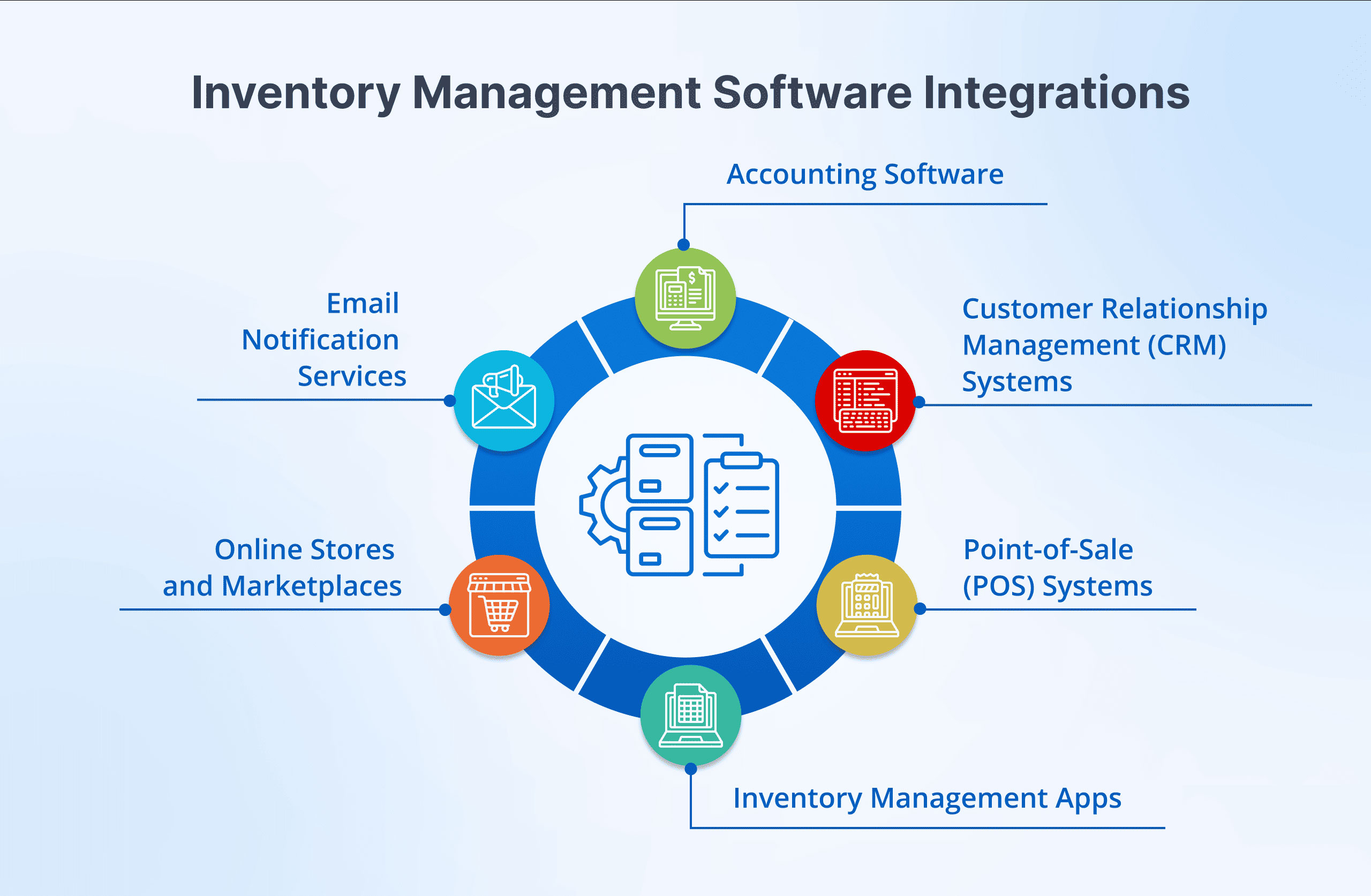
5. Integration with Accounting & eCommerce Platforms
Your software should integrate with:
-
Accounting tools (QuickBooks, Xero)
-
eCommerce platforms (Shopify, WooCommerce)
-
POS systems
-
ERP solutions
6. Advanced Reporting & Analytics
Look for dashboards that show:
-
Inventory turnover ratio
-
Dead stock
-
Sales trends
-
Supplier performance
Data-driven insights improve profitability and operational decisions.
Types of Inventory Management Systems
Understanding system types helps you choose wisely.
Cloud-Based Systems
-
Accessible from anywhere
-
Lower upfront cost
-
Automatic updates
-
Ideal for small to mid-sized businesses
On-Premise Systems
-
Installed locally
-
Higher initial investment
-
Greater customization
-
Preferred by large enterprises
ERP-Integrated Systems
These combine inventory with finance, HR, CRM, and operations into one platform.
Best for:
-
Manufacturing companies
-
Large distribution networks
Benefits of Using Inventory Management Software
Implementing the right system delivers measurable advantages:
1. Increased Accuracy
Automation reduces human errors by up to 90%.
2. Improved Cash Flow
Optimized stock levels free up working capital.
3. Better Customer Experience
Accurate stock data means fewer canceled orders.
4. Time Savings
Automated processes reduce manual workload.
5. Scalability
Cloud solutions grow with your business.
Inventory Management Software for Different Business Types
eCommerce Businesses
Key needs:
-
Real-time stock sync across marketplaces
-
Automated order fulfillment
-
Integration with shipping providers
Retail Stores
Key needs:
-
POS integration
-
Multi-store tracking
-
Sales performance reporting
Manufacturing Companies
Key needs:
-
Raw material tracking
-
Bill of materials (BOM) management
-
Production planning
Wholesale & Distribution
Key needs:
-
Bulk pricing management
-
Supplier coordination
-
Advanced reporting
How to Choose the Right Inventory Management Software
Choosing the wrong system wastes money and creates operational headaches.
Follow this 7-step process:
Step 1: Define Your Business Needs
Ask yourself:
-
How many SKUs do you manage?
-
Do you operate multiple warehouses?
-
Do you sell online, offline, or both?
Step 2: Set a Budget
Consider:
-
Monthly subscription cost
-
Implementation fees
-
Training expenses
Step 3: Evaluate Scalability
Your system should handle future growth without performance issues.
Step 4: Check Integration Capabilities
Ensure compatibility with your existing tools.
Step 5: Test Usability
Choose software that is:
-
Easy to navigate
-
User-friendly
-
Mobile-accessible
Step 6: Review Security Standards
Look for:
-
Data encryption
-
Role-based access control
-
Regular backups
Step 7: Read Customer Reviews & Case Studies
E-E-A-T matters. Choose providers with:
-
Proven track record
-
Industry certifications
-
Transparent support policies
Common Mistakes to Avoid
Many businesses fail to maximize their software investment.
Avoid these errors:
-
Choosing the cheapest option without features
-
Ignoring employee training
-
Not migrating data correctly
-
Failing to update stock processes
Technology alone does not solve problems—implementation strategy matters.
Advanced Strategies for Optimizing Inventory
To build topical authority and long-term operational efficiency, apply these modern techniques:
Demand Forecasting with AI
Use predictive analytics to anticipate seasonal trends.
ABC Inventory Analysis
Categorize products:
-
A: High-value items
-
B: Moderate-value items
-
C: Low-value, high-volume items
Focus resources where they matter most.
Just-In-Time (JIT) Strategy
Minimize storage costs by ordering stock only when needed.
Inventory Turnover Optimization
Calculate:
Inventory Turnover = Cost of Goods Sold / Average Inventory
A higher ratio indicates better efficiency.
How Inventory Management Software Supports Business Growth
Inventory systems are not just operational tools—they are growth drivers.
They enable:
-
Expansion into new markets
-
Multi-channel selling
-
Automated supply chain coordination
-
Data-driven investment decisions
When combined with strong analytics, businesses can forecast demand and scale confidently.
Security & Compliance Considerations
As businesses digitize operations, data security becomes critical.
Ensure your software includes:
-
Secure cloud hosting
-
GDPR compliance
-
Audit logs
-
Disaster recovery planning
Trustworthy providers maintain transparent privacy policies and compliance certifications.
ROI of Inventory Management Software
Businesses often ask: Is it worth the investment?
Here’s how ROI is generated:
-
Reduced stock losses
-
Lower storage costs
-
Improved sales conversion
-
Fewer manual labor hours
-
Faster order processing
Many companies see measurable efficiency gains within 3–6 months of implementation.
Implementation Best Practices
To ensure successful adoption:
-
Train your team thoroughly
-
Start with a pilot phase
-
Clean and verify data before migration
-
Monitor KPIs regularly
-
Optimize workflows continuously
Implementation success determines long-term performance.
The Future of Inventory Management Software
Technology continues to evolve rapidly.
Emerging trends include:
-
AI-driven autonomous inventory systems
-
IoT-enabled warehouse automation
-
Blockchain-based supply chain tracking
-
Voice-controlled warehouse operations
Businesses that adopt modern tools early gain competitive advantage.
Frequently Asked Questions
What is the best inventory management software for small businesses?
Cloud-based solutions with automation, integration, and reporting features are ideal for small to mid-sized companies.
Can inventory software integrate with Shopify?
Yes. Most modern systems integrate directly with major eCommerce platforms.
Is inventory management software expensive?
Costs vary depending on features and scale. Cloud solutions typically offer affordable subscription models.
How long does implementation take?
Small businesses may implement within weeks, while enterprise systems can take several months.
Choosing the right inventory management software is not just about tracking stock—it’s about building a scalable, efficient, and data-driven business.
If you want:
-
Better control
-
Higher profitability
-
Reduced operational risk
-
Long-term growth
Investing in the right system is a strategic decision, not an expense.
At LoadingTips.com, we focus on delivering expert-level insights that help businesses make smarter technology decisions. Evaluate your needs carefully, compare options thoroughly, and choose a solution that supports both your current operations and future expansion.
The businesses that master inventory control are the ones that scale confidently.
Internal Links
- Best SEO Agencies in 2026: How to Choose the Right Partner for Sustainable Growth
- Best SEO Companies in 2026: How to Choose a Trusted Partner That Delivers Real Rankings
- International SEO Agency: How to Choose the Right Partner to Scale Your Business Globally
- SEO Expert Near Me: How to Find a Trusted Local SEO Specialist That Drives Real Results
- The Ultimate Guide to HR Management Software: Features, Benefits & How to Choose the Best Solution